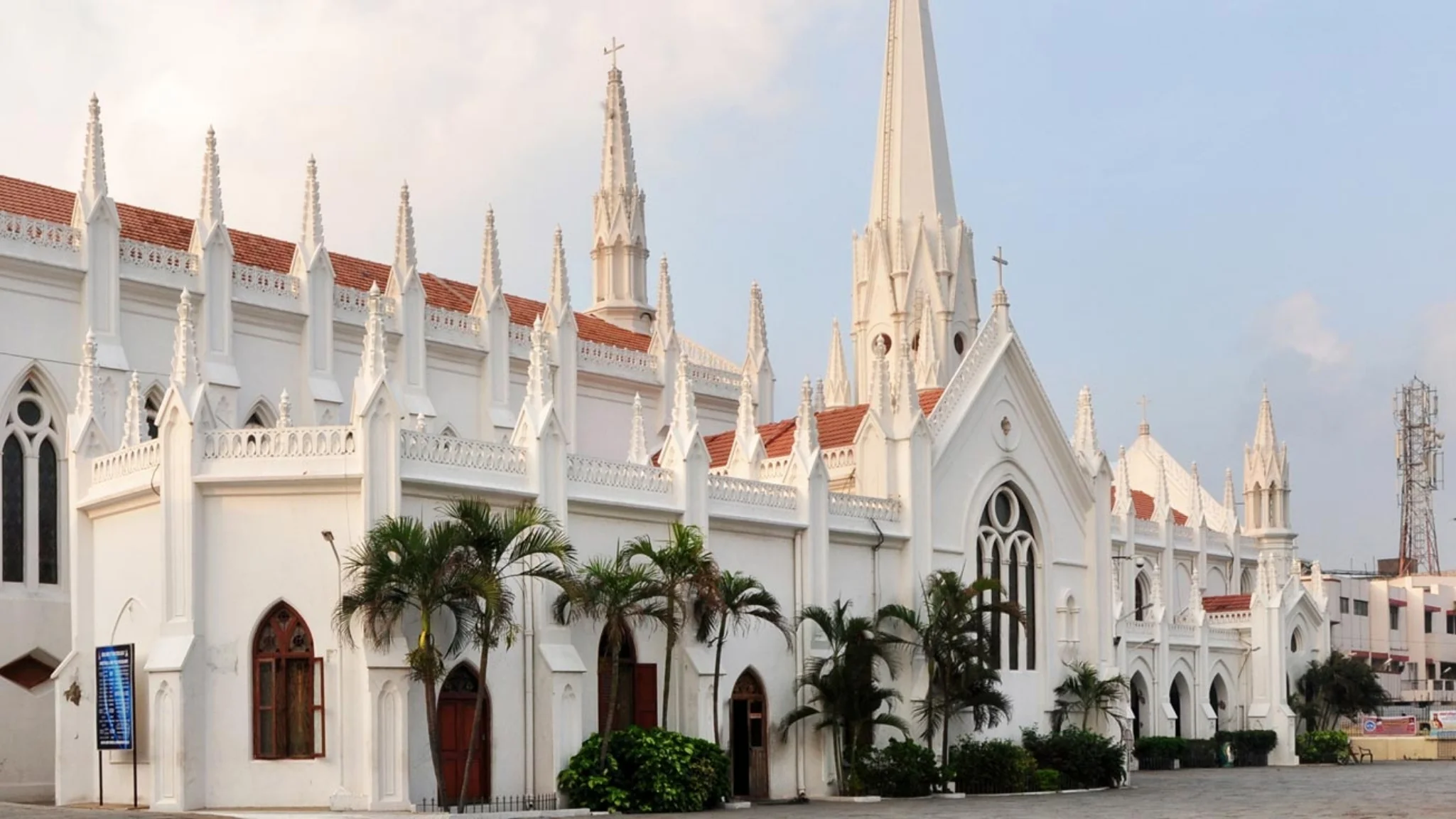
South India Christian Pilgrimage - Overview

The South India Christian Pilgrimage is a thoughtfully designed nine-day journey for travelers seeking a deeper understanding of apostolic Christianity and living Christian traditions in South India. Beginning and concluding in Chennai, the itinerary follows a structured and disciplined route that connects Chennai, Velankanni, and Mysuru. This journey emphasizes faith continuity, spiritual immersion, and historical clarity rather than rushed sightseeing.
Christianity reached South India through St. Thomas the Apostle, whose mission established some of the world’s oldest Christian communities outside the Middle East. Therefore, the pilgrimage begins in Chennai, a city deeply connected to apostolic heritage. Churches associated with St. Thomas continue to function as active places of worship. As a result, travelers experience Christianity as a living tradition rather than a distant historical narrative.
Chennai: Apostolic and Colonial Christian Foundations
Chennai serves as the spiritual gateway of the pilgrimage. Over centuries, Christianity integrated into local society while retaining its theological foundations. Consequently, the city reflects both apostolic roots and colonial Christian influence.
Key churches in Chennai highlight the early presence of Christianity in South India. Moreover, these sites remain central to local Christian communities. Guided interpretation explains how faith traditions survived, adapted, and expanded. Therefore, travelers gain essential historical grounding before moving toward pilgrimage-focused destinations.
Velankanni: Marian Pilgrimage and Devotional Continuity
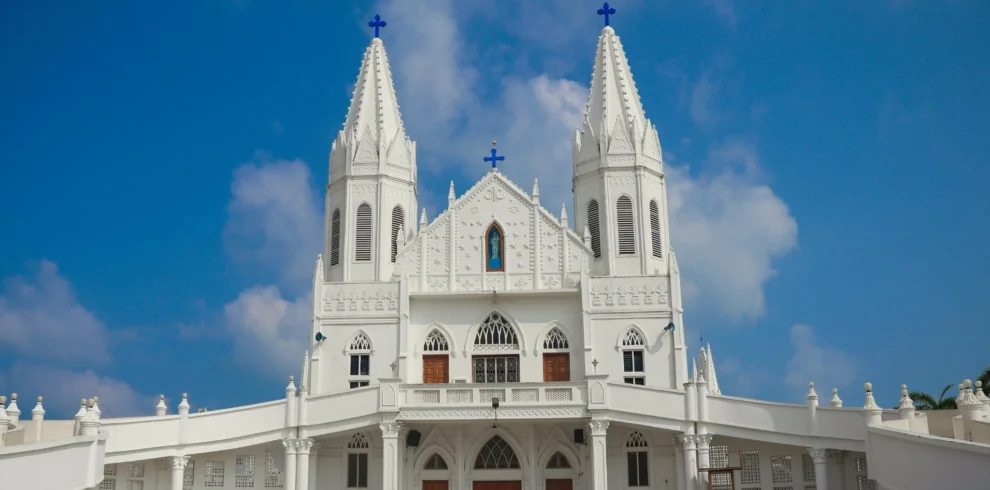
From Chennai, the journey proceeds to Velankanni, one of Asia’s most significant Marian pilgrimage centers. Velankanni attracts pilgrims throughout the year. However, its importance lies in centuries of devotional practice rather than scale alone.
The Basilica of Our Lady of Good Health represents healing traditions, prayer rituals, and communal worship. Additionally, surrounding pilgrimage zones allow time for reflection and spiritual engagement. Therefore, this stage of the South India Christian Pilgrimage focuses on devotion and faith experience.
Mysuru: Architectural Expression of Christian Faith
The pilgrimage then continues to Mysuru, where Christianity found expression through grand architecture and organized parish life. St. Philomena’s Cathedral stands as one of the largest churches in India. It symbolizes the expansion of Christian communities in southern India.
Moreover, Mysuru reflects the coexistence of Christianity with regional culture. This stage highlights how faith integrated respectfully into local society while maintaining a distinct religious identity.
South India Christian Pilgrimage for International Travelers
Additionally, this pilgrimage is planned with international travelers in mind. Therefore, routing remains disciplined, travel distances remain manageable, and rest periods are well balanced. Professional guidance ensures historical accuracy and cultural sensitivity throughout the journey.
Moreover, the itinerary suits individuals, faith-based travelers, and organized pilgrimage groups. Most importantly, it appeals to travelers who value authenticity over commercial tourism. By the end of the pilgrimage, participants gain a clear understanding of apostolic Christianity, Marian devotion, and the living Christian heritage of South India.
Trip Highlights
- Apostolic Christian heritage of South India
- St. Thomas–associated churches in Chennai
- Colonial Christian landmarks of Chennai
- Marian pilgrimage experience at Velankanni
- Basilica of Our Lady of Good Health
- Living devotional traditions
- St. Philomena’s Cathedral, Mysuru
- Faith-based cultural immersion
- Disciplined nine-day pilgrimage routing
- Disciplined nine-day pilgrimage routing
- Quiet spiritual reflection opportunities
- Historically grounded interpretation